
Become a Citizen Scientist: Join a Community Project at SoundBio
We believe that science is better when we inspire and learn from each other.
All Community Project events are open to the public and are open to newcomers of all skill levels (no experience required).
You are welcome to check out your first event for free. To continue participating in a community project, please sign up to become a member.
Have an exciting idea for a new Community Project? Fill out the Community Project Interest Form. After you fill out the Interest Form, a member of the SoundBio Community will get in touch with you via email to answer any questions about the application process.
Check out our Quick Start Guide to learn more about what it takes to lead a Community Project.
Current COMMUNITY PROJECTS
BIOSENSORS
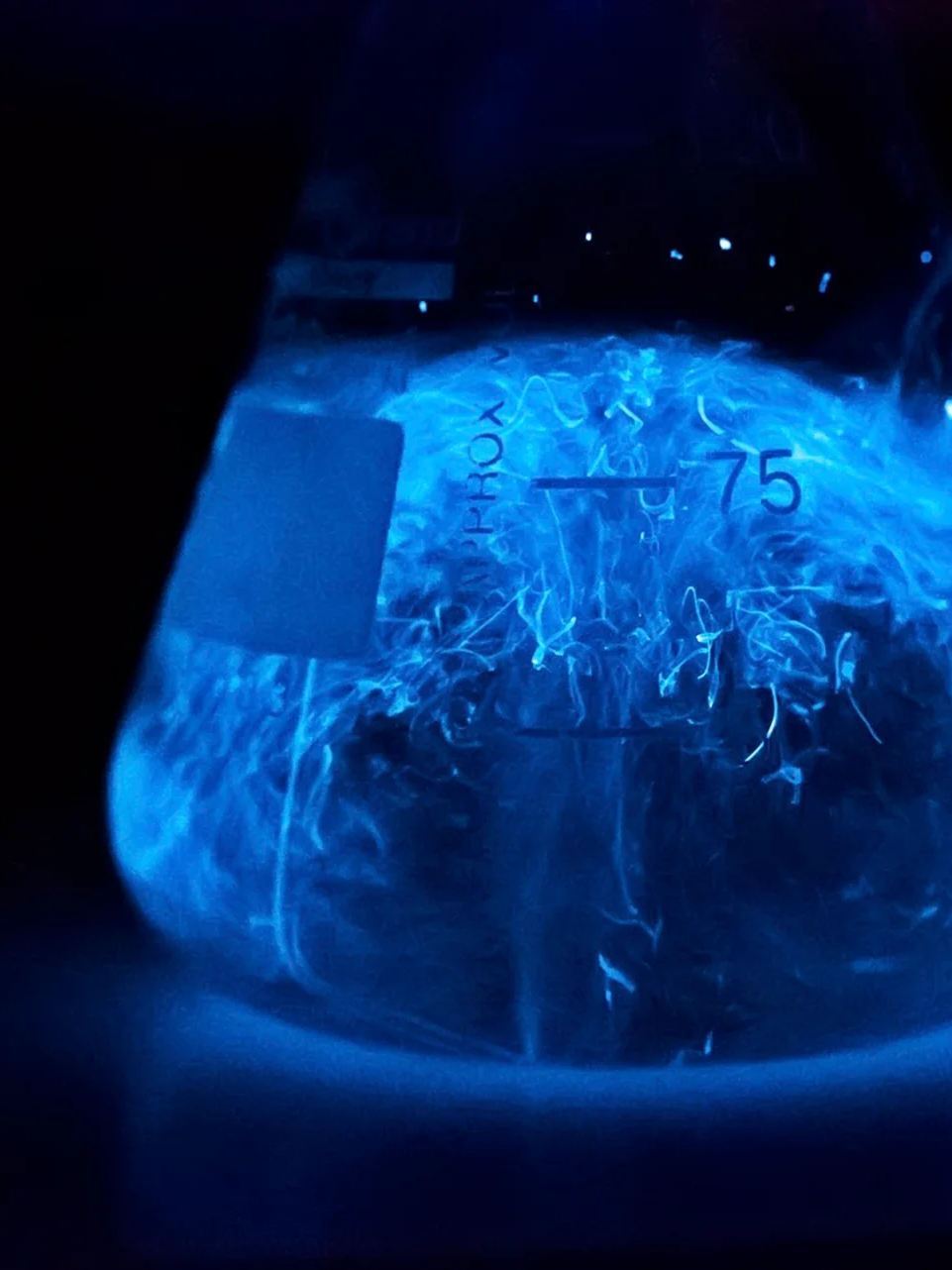
We are exploring an accessible approach to environmental research that uses the natural glow of bioluminescent organisms to detect heavy metals and other contaminants. Through a series of thoughtfully designed experiments, our team will collaborate to evaluate the effectiveness of different organisms as living biosensors, working toward creating an accessible, easy-to-use testing kit for students, educators, and community advocates. Our first phase focuses on soil extraction techniques and assessing organism sensitivity, laying the groundwork for deeper exploration into local environmental conditions.
Whether you’re curious about contamination in your area, inspired by the science of bioluminescence, or eager to develop hands-on laboratory skills in a collaborative setting, we invite you to join us at an upcoming event and be part of this exciting journey with SoundBio Lab.
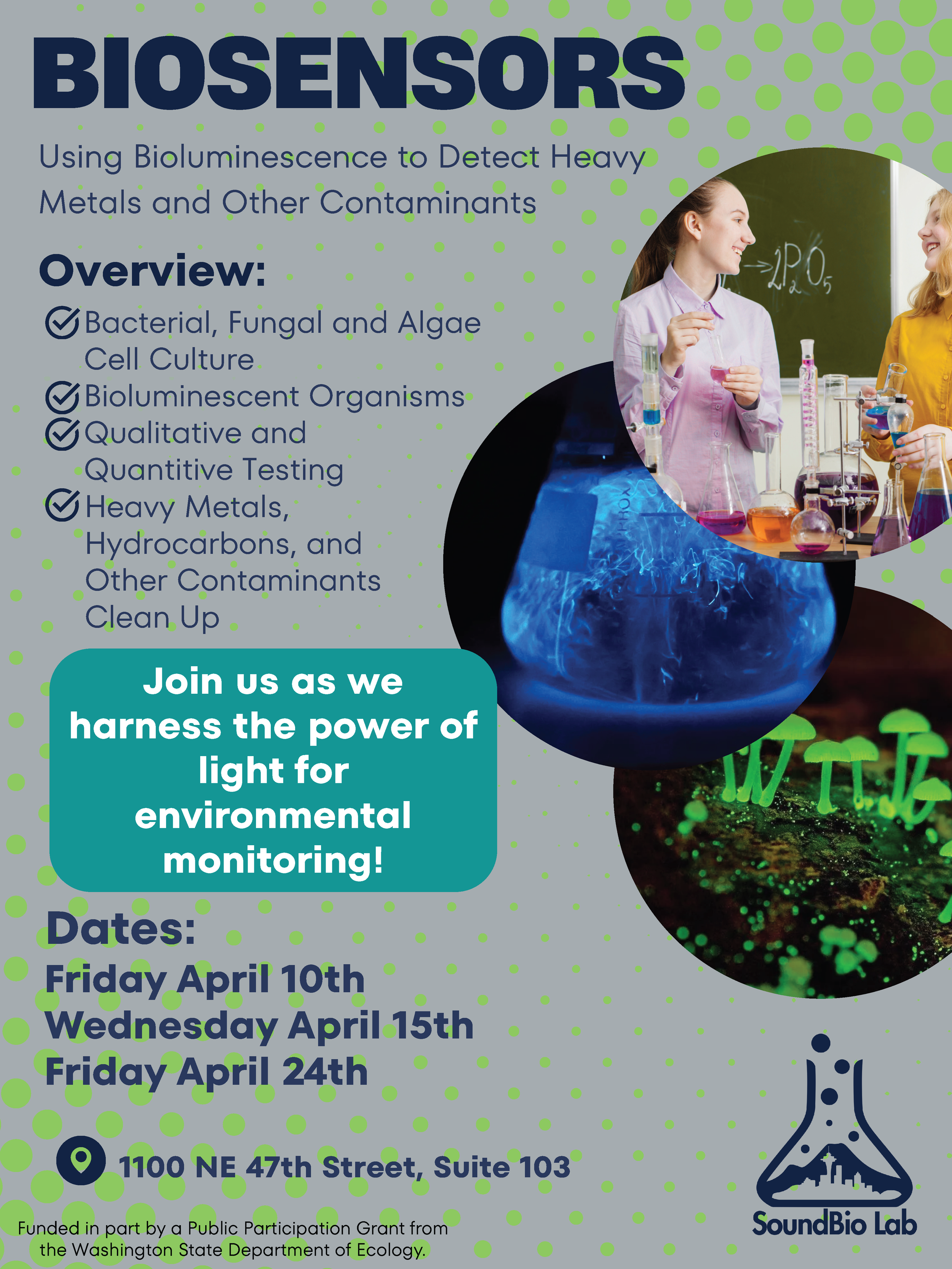
Our first workshop will be on Friday, April 10 from 4-6 pm! We’ll explore which organisms are best for detecting heavy metals. This event is free and open to ages 12+. Register here.
Follow us on #biosensors on Slack! Not on Slack yet? Email info@sound.bio to join.
Community Project OVERVIEW
Community Projects are part of how we at SoundBio Lab fulfill our mission of providing everyone the resources, knowledge, and support to explore and grow their passion for science. As an extension of citizen science initiatives, community science not only allows participation by members of the larger community but also insists that research be directed by their interests, concerns, and existing expertise.
These independently organized research projects allow individuals from diverse technical and non-technical backgrounds to learn, share, and ultimately create knowledge unencumbered by the numerous barriers that limit access to STEM resources and power. Community Projects are essential for building capacity for a truly diverse, equitable, and empowered life sciences ecosystem.
Goals
The central goal of a Community Project is to provide an opportunity for our members and the greater public to learn new skills, build relationships with like-minded people, and become familiar with the processes of collaborative scientific research.
Towards this goal, all Community Projects must meet specific criteria:
1. Involves authentic, engaging life science work that can be carried out in our lab space. 2. Encourages and accommodates participation by multiple people with all experience levels, especially people new to biology and life sciences.
3. Provides frequent, publicly offered opportunities to join the project.
Additionally, as we aim to increase capacity, power, and equity alongside access, we encourage projects that result in concrete accomplishments for participants. Some possible outcomes include authorship on peer-reviewed papers or novel resources (datasets, workshops, open-source hardware/software/wetware, etc.) that benefit local or global communities, both human and otherwise.
Guidelines
Community Projects are open to the public – whether hosted online or at the lab. All meetings and events are posted on our Luma account.
New folks can attend their first event for free. To continue participating in a community project, people can sign up to become a member.
Every community project requires at least one Researcher or Lead member as a project leader. If your community project is approved, project leaders get honorary Researcher/Lead privileges. Project leaders have keyed access to the laboratory and access to our inventory system for ordering supplies.
Project leaders are responsible for following all lab policies and project guidelines:
Supervising members during lab work
Posting events/meetings on our Luma account for new people to join
Welcoming new participants and teaching them about the project
Tinkerers can do lab work while they are supervised by a project leader (i.e. a Researcher or Lead member) or during the Lab Manager’s open hours. Completion of the SBL ‘Lab Skills Training’ is required if Tinkerer members want to work without supervision of the project lead, either during open hours or with a key given to them by the lead.
New people are still welcome to visit the lab without prior training.
PAST COMMUNITY PROJECTS

Kombucha Science
We hope to better understand the microbial ecology of kombucha and explore the potential applications of kombucha-based materials. Whether you are more interested in homebrewing or tinkering around in the lab, you are welcome to join our team.
Seed.code
Join a team implementing a plant genetic engineering workflow at SoundBio, and developing an accompanying software assistant.

Dirt Life
We are looking for microbial-minded members to help hundreds of community gardeners with their interest in microbial diversity, and their concern about soil-borne fungal pathogens.
The plan is to involve volunteers like you, our Lab, and the community gardeners in a project that could reduce plant pathogens and enhance the quality of our precious soil at the same time.
We work on research skills, a variety of lab skills, plus experimental design techniques. No experience necessary!

Prions Journal club
Our research group studies prions through journal club meetings and computer modeling. In our meetings, we discuss scientific papers and host special lectures on Alzheimer's and other neurodegenerative diseases.

Biomodelling
We want to explore the intersection between programming, biology, and network systems through simulating gene regulatory networks in a program (in silico) and gathering experimental data of the same gene network, inserted into bacteria (in vivo).

Agar Artists
Join a community project focused on creating agar art! The art pieces will be made out of genetically modified E. coli that display different colors and fluorescence. We’re hoping to create educational pieces (centered around antibiotic resistance, the microbiome, etc.) and eventually take the art to elementary schools, nearby coffee shops, and even art galleries. The project is the perfect place to create any kind of art you want.

Citizen Salmon
The goal of Citizen Salmon is to acquire a deeper knowledge of local food origins and thus provide the same opportunity for inquiry to the public. By connecting the information about a salmon’s genes with its birthplace, CS aims to develop a simple tool that citizen scientists may use independently to determine the origin of salmon on their plate.
Note: SoundBio Lab is currently not hosting an iGEM team. If you are interested in iGEM, search for “Emerald_City iGEM” on your favorite search engine.